For BELSPO, science diplomacy and cultural diplomacy constitute two complementary pillars of its international activities. Through its Federal Scientific Institutions (FSIs) [1], Belgium possesses an exceptional scientific, historical and cultural heritage, international research infrastructures and extensive networks of researchers, heritage experts and museums. This unique combination makes BELSPO an important international actor in scientific and cultural cooperation and strengthens Belgium’s international profile.
Building on the Science and Cultural Diplomacy (SCD) Action Plan approved in 2025, BELSPO is working towards the structural integration of science and cultural diplomacy into its policies and activities, in line with the European science diplomacy agenda. The Action Plan aims to further strengthen the international role of BELSPO, the FSIs and their expertise by actively deploying science, culture and heritage as instruments for international cooperation and dialogue.
The Action Plan focuses on the following priorities:
Belgian research infrastructures also contribute to science diplomacy. One example is the joint
investment by Belgium, the European Commission and UNESCO in the CongoFlux carbon flux tower in the Congo
Basin [2], linked to the Yangambi Centre of Expertise for Climate
and Biodiversity. Located in the Yangambi Biosphere Reserve in the Democratic Republic of the Congo, this
carbon flux tower is much more than research infrastructure for climate change and biodiversity: the
initiative is an example of science diplomacy in action, bringing together Belgian, Congolese and
international partners, including the European Commission, UNESCO, the Belgian Federal Public Service
Foreign Affairs and BELSPO, around a shared global climate and biodiversity challenge with regional and
local impacts.
The tower provides the first continuous measurements of greenhouse gas exchanges between the
Congo Basin and the atmosphere, generating essential knowledge about the role of the world’s
second-largest tropical rainforest and one of its major carbon sinks.
The Yangambi [4] Centre of Excellence, with its carbon flux tower,
unique xylotheque [5], herbarium coordinated by Meise Botanic
Garden, CSB (Centre de Suivi de la Biodiversité) managed by the Royal Belgian Institute of Natural
Sciences, as well as an extensive forest sampling transect and other facilities, also functions as an
international multidisciplinary research hub. It brings together complementary expertise in climate
science, ecology, forest management, biodiversity, hydrology, biogeochemistry and other disciplines.
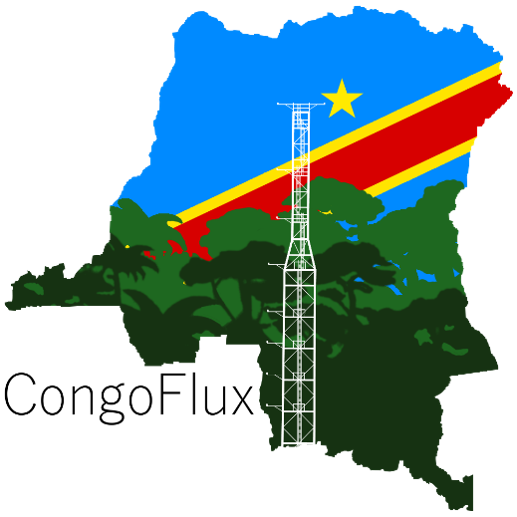
Through cooperation between, among others, Ghent University (UGent), the Royal Museum for Central Africa (RMCA), INERA, and Belgian and European partners, CongoFlux contributes to world-class technological and traditional knowledge exchange, scientific capacity-building in Central Africa—including for local researchers and technicians—and the involvement of local communities, particularly young people. By linking the infrastructure to the European Integrated Carbon Observation System (ICOS), data are collected and shared according to international standards, integrating the Congo Basin into global climate observation networks [3].
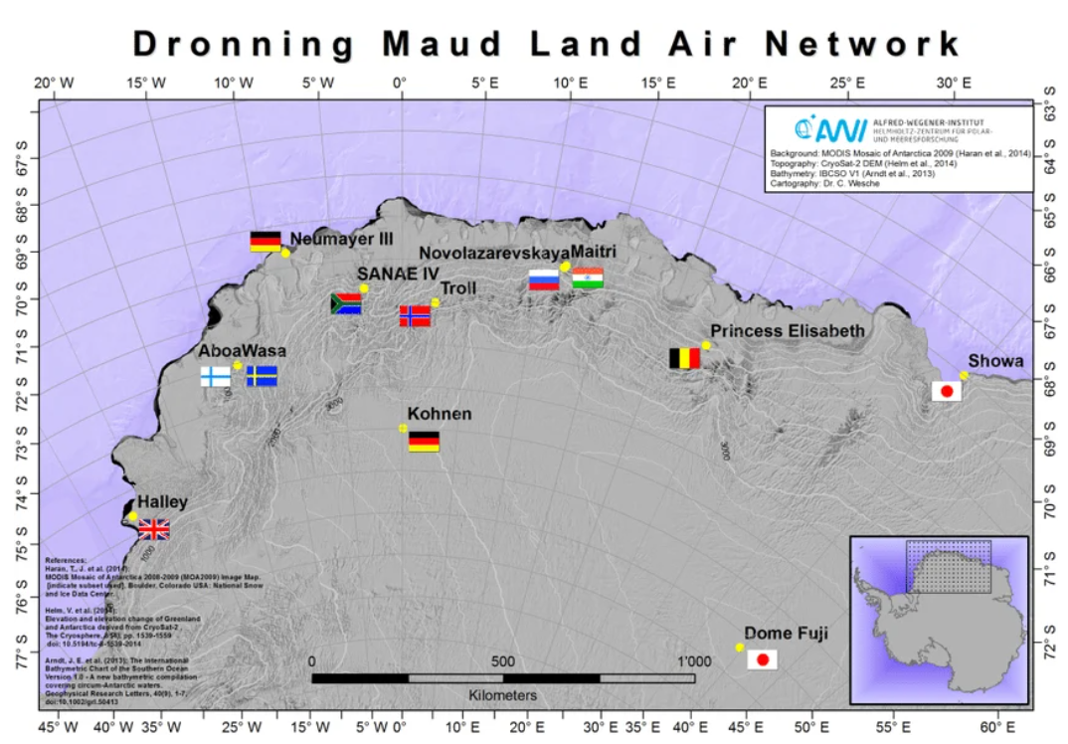
Another example is the Princess Elisabeth Antarctica Station [6], where cooperation with Chilean and Peruvian experts is possible,
including through Memoranda of Understanding (MoUs), while logistical support is provided in
cooperation with South Africa [7].
Belgium works closely with South Africa for the logistical support of the Princess Elisabeth Antarctica
Station through the DROMLAN and DROMSHIP networks—respectively the Dronning Maud Land Air Network and the
Dronning Maud Land Shipments Network. Flights depart from Cape Town to the Troll Airfield in Antarctica,
from where personnel, scientific equipment and supplies are transported onwards to the various research
stations in Dronning Maud Land, including the Belgian Princess Elisabeth Station. Through this
cooperation, South Africa serves as the main logistical gateway for Belgian polar activities and
constitutes an essential link in international scientific cooperation in Antarctica.
Each of these initiatives illustrates how science can contribute to trust, dialogue and joint decision-making, even when the political context is particularly challenging. At the same time, these examples demonstrate the role of research institutions and individual researchers as actors in science diplomacy.
By actively participating in European and global networks, BELSPO contributes to strengthening Belgium’s position within the European Research Area and to the objectives of Belgian foreign policy.
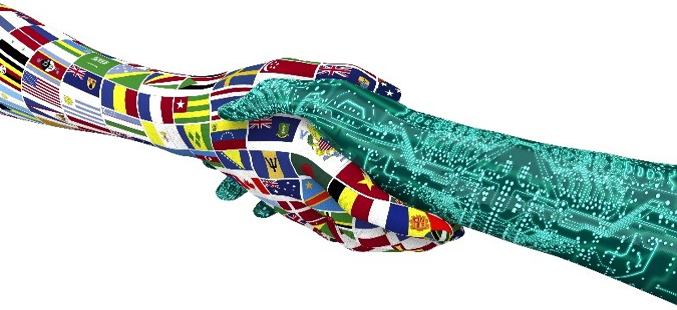
BELSPO’s international activities go beyond traditional scientific cooperation and also address the technological and societal dimensions of research and innovation. Through the Federal Scientific Institutions, research programmes and international partnerships, BELSPO has expertise and networks that can contribute to international dialogue on artificial intelligence, digitalisation, big data and other emerging technologies. BELSPO aligns with broader Belgian and European priorities concerning technological sovereignty, Open Science, digital transformation, inclusive access to knowledge and technology, as well as knowledge security.
In the cultural field, new opportunities for cooperation are being explored and existing partnerships
strengthened with museums, heritage institutions and research organisations in countries including China,
Thailand and Morocco. Memoranda of Understanding (MoUs) have been prepared or further developed around
themes such as collection management, conservation, digitalisation, joint exhibitions or exhibition
exchanges, expert exchanges and innovative restoration techniques.
In this way, the FSIs not only
contribute to the international profile of Belgian heritage, but also strengthen, including through
exhibitions, the role of culture as an instrument for dialogue, trust and sustainable
international
cooperation.
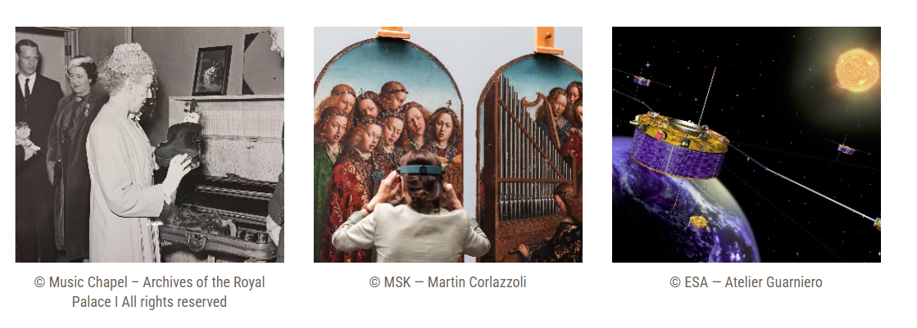
The exhibition ‘Music, Sound & Imagination’ at
the Royal Palace [10] in 2026 was not only a showcase for
Belgium’s federal scientific and cultural heritage, but also a catalyst for the international cultural
diplomacy of BELSPO and the Federal Scientific Institutions (FSIs).
Organising seminars on science diplomacy is also an effective way of strengthening networks, facilitating
dialogue, increasing visibility and contributing to a better understanding of science diplomacy in
practice and of the roles played by different actors. BELSPO plans to organise a second Belgian Science
Diplomacy seminar in December 2026, focusing on “Science Diplomacy in Practice”, ten years after the first
Belgian science diplomacy seminar in 2016 [11].
BELSPO aims to further strengthen science diplomacy by promoting knowledge-sharing and
capacity-building. In turn, this should contribute to better-informed decision-making.
In spring 2027, BELSPO intends to organise a round table during the Diplomatic Days for diplomats and
advisers working at Belgian embassies and diplomatic missions around the world. This meeting could
contribute to a better mutual understanding of the potential of science diplomacy as an enabling
instrument in a changing world characterised by complex and interconnected challenges.
In addition, BELSPO aims to contribute to the visibility and integration of science diplomacy into the
training of new diplomats, so that Belgium’s future representatives are as well prepared as possible to
leverage the interaction between science, technology and foreign policy in a rapidly changing world.
[1] www.belspo.be/belspo/fsi/index_en.stm
[2] www.frontiersin.org/journals/soil-science/articles/10.3389/fsoil.2022.883236/full
[3] www.belspo.be/belspo/Fedra/proj.asp?COD=EF%2F211%2FICOS-BE&l=en
[4] www.yangambi.org/en/about/research-center
[5] en.wikipedia.org/wiki/Xylotheque
[6] www.antarcticstation.org
[7] www.antarcticstation.org/science/prepare_season/
[8] www.belspo.be/belspo/openscience/index_en.stm
[9] www.go-fair.org/fair-principles
[10] royal.belspo.be/expo/index_en.stm
[11] www.belspo.be/belspo/coordination/doc/events/20161201_seminar-science-diplom.pdf



