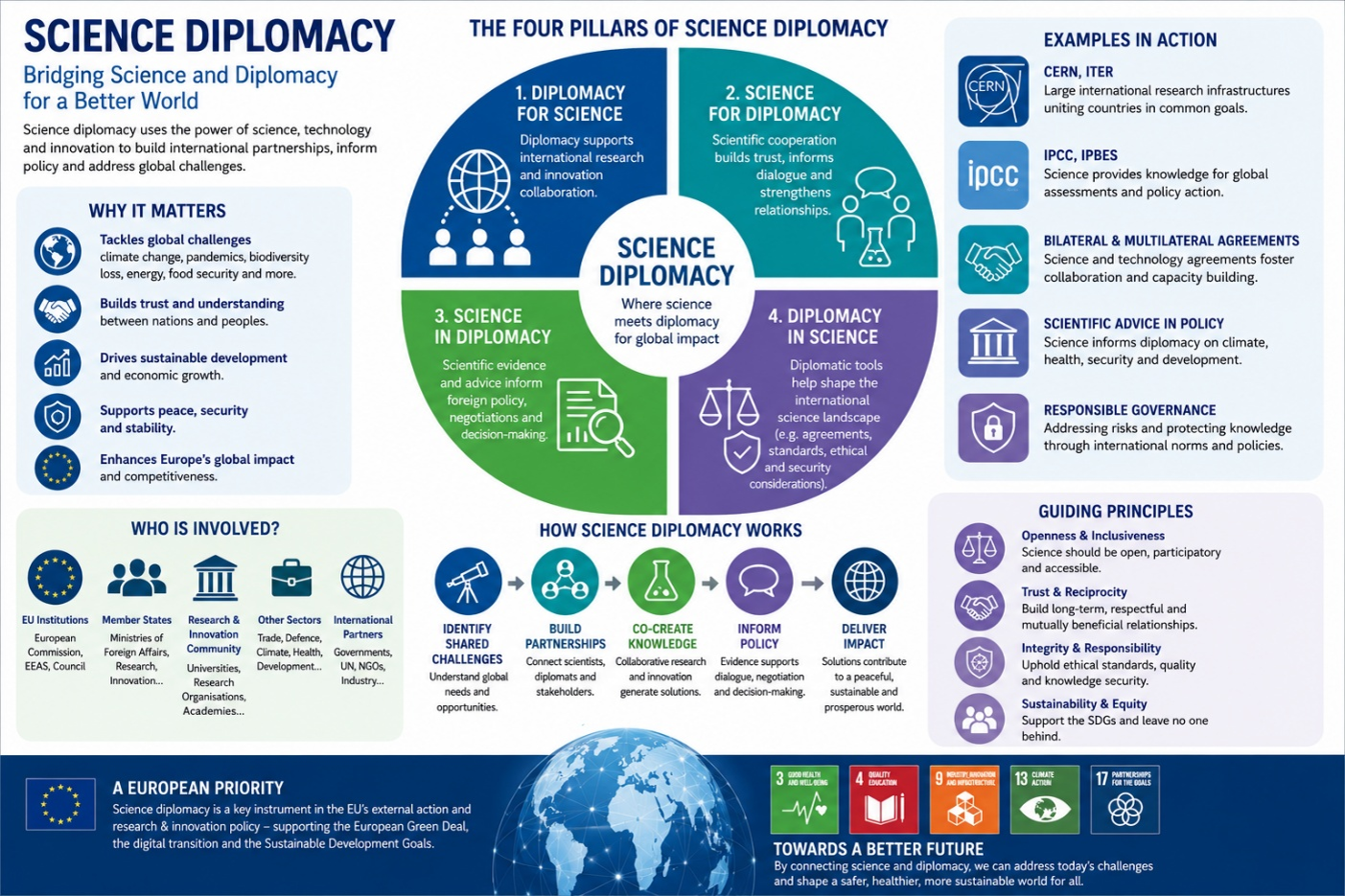
Europe is investing in stronger and better coordinated science diplomacy among the Member States and the European Commission in response to a rapidly changing geopolitical and technological context. At a time when technological breakthroughs are succeeding one another at an ever-increasing pace and the international order is under pressure, major challenges such as climate change, pandemics, biodiversity loss, energy security and the digital transition require effective interaction between research and diplomacy.
The European Union is shifting its international approach towards a “Global Europe” agenda, in which open strategic autonomy, economic competitiveness and geopolitical capacity play a central role. Within this framework, research and innovation are increasingly regarded as strategic assets for strengthening European competitiveness, technological sovereignty and economic security. At the same time, the EU remains explicitly committed to a rules-based multilateral order and to international cooperation with reliable partners. Science diplomacy is therefore a crucial instrument for connecting European interests and values with global challenges, building bridges between countries and promoting the joint development of knowledge. Science diplomacy supports the European Green Deal [1], the digital transition and the achievement of the Sustainable Development Goals (SDG's) [2], while simultaneously contributing to an open, secure and resilient international research and innovation environment [3].
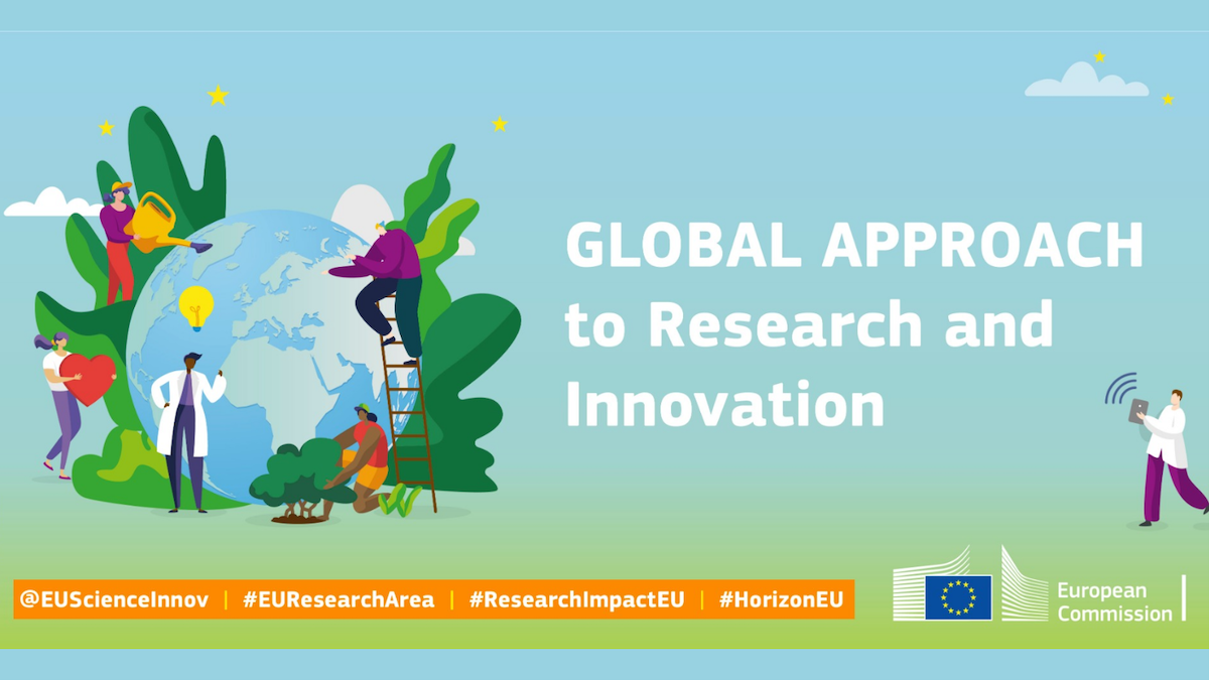
The European Union has long advocated stronger and better coordinated science diplomacy. An important
milestone was the Global Approach to Research and Innovation [4] of 2021, which for the first time developed an integrated European vision
for international cooperation in research and innovation, with science diplomacy as one of its central
instruments.
This ambition is reflected in the Global Approach to Research and Innovation (2021),
through which the European Union positions international cooperation in research and innovation as a
strategic instrument for addressing both global challenges and European interests.
The Global Approach emphasises that international cooperation should be based on openness, reciprocity, a
level playing field, respect for fundamental values and academic freedom. At the same time, it reflects
the broader evolution towards a more geopolitical and competitive Europe, in which research and innovation
contribute to open strategic autonomy and competitiveness.
This approach builds on the expertise of the Member States, the European Commission, the European External Action Service (EEAS) and the global network of EU Delegations. Its objective is to achieve better alignment between research policy, innovation policy and foreign policy.
Strategically, science diplomacy should contribute to:
The current European approach builds on more than ten years of cooperation between researchers, diplomats and policymakers, including through initiatives funded under the European Horizon 2020 programme. [5]. Projects such as EL-CSID (European Leadership in Cultural, Science and Innovation Diplomacy) [6] developed some of the first conceptual frameworks for European science diplomacy. S4D4C (Using Science for/in Diplomacy for Addressing Global Challenges) [7] developed practical tools, training programmes and policy recommendations for European and national governments. InSciDE (Inventing a Shared Science Diplomacy for Europe) [8] examined historical examples and societal applications of science diplomacy and contributed to the development of a shared European vision. CatalySD [9] in turn, contributes to career perspectives, curricula and international partnerships.
Building on this strong foundation, the European Science Diplomacy Alliance [10] was established, bringing together policy organisations and diplomats, universities [11] (for example through the EUTOPIA project [12]), research institutions and individual researchers to further promote and strengthen science diplomacy. Beyond Europe, multilateral organisations are also investing in science diplomacy. The Asia-Europe Foundation [13] [14], for example, focuses on training and dialogue involving young researchers, policymakers and diplomats.
The concept of science diplomacy continues to evolve and is now increasingly connected to fields such as cultural diplomacy and technology diplomacy. Recent geopolitical developments and uncertainties have also demonstrated that science diplomacy is not exclusively an instrument of cooperation (see above: the fourth dimension of science diplomacy). Restrictive measures are now also part of the policy toolbox, as illustrated, for example, by Article 22 [15] of Horizon Europe [16]. Science diplomacy therefore encompasses elements of both soft power and hard power.
Within the European Research Area (ERA), and more specifically within the framework of the Global
Approach [17], the need for a common
European framework for science diplomacy was emphasised in 2024.
Under the coordination of the European Commission and the European External Action Service (EEAS), a
whole-of-government approach was adopted. Through a bottom-up process, representatives from research,
diplomacy, foreign affairs, trade, defence, climate and innovation were brought together in
multidisciplinary working groups addressing four strategic themes:
Their analyses and recommendations were brought together in the report A European
Framework
for Science
Diplomacy (2025) [18], whose Executive Summary [19] provides a particularly useful overview. The recommendations
include both short- and long-term actions and clarify which actors are involved at European, national and
institutional levels. At a time of increasing disinformation and mistrust, particular attention was also
paid to the importance of the narrative surrounding science as a connecting force through the shared
pursuit of truth.
During the Second European Conference on Science Diplomacy, held in Copenhagen in 2025 [20] under the title “Bridging Divides in a Fragmented World”, the dialogue on
the desirability of a European framework and stronger coordination in science diplomacy was further
developed. The conference addressed both thematic issues—such as oceans and polar regions—and regional
dimensions, while bringing together different types of actors, including those operating at the nexus of
industry and research infrastructures. Within the same conference framework, young science and diplomacy
professionals from Asia and Europe formulated recommendations in the Asia-Europe Youth Communiqué on
Science and Technology Diplomacy [21]. These recommendations
called for a stronger integration of youth participation, inclusiveness, capacity-building and
international cooperation into the future development of science and technology diplomacy.
With the adoption of the Council Recommendation [22] on Science Diplomacy in May 2026, science diplomacy was formally embedded as a strategic instrument within the European diplomatic toolbox. The framework provides a common vision and strategic basis within which the EU, its Member States and actors from the fields of research, innovation and diplomacy can better coordinate their efforts, including in relation to the interaction between science diplomacy and cultural diplomacy. A particularly important development is the strong emphasis on a multidisciplinary and multi-stakeholder approach, with special attention given to the creation of safe spaces in which scientists, policymakers, diplomats and other stakeholders can engage in dialogue. Science diplomacy is thus structurally embedded at the intersection of research, innovation, foreign policy and security policy, with the objective of strengthening European competitiveness, geopolitical capacity and a secure, sustainable and prosperous future, while also contributing to peace in the world.
As a concrete follow-up to the European recommendations on science diplomacy, the three-year Consolidating European Science Diplomacy (CUSP) [23] project was launched in 2026. CUSP aims to further strengthen European cooperation in science diplomacy through the development of an online European Science Diplomacy Hub, facilitating knowledge exchange, cooperation and networking. The project also places strong emphasis on training and capacity-building through targeted programmes, with the objective of developing a broader and more professional community of science diplomacy actors across Europe.
Science diplomacy is increasingly becoming a strategic pillar of bi-regional cooperation between Europe
and other world regions. It is also emerging as a distinct area of cooperation within international
partnerships. For example, science diplomacy occupies a prominent position within the EU–African Union
(AU) partnership on Research, Technology and Innovation (RTI) and the Joint Innovation Agenda.
During the ministerial conference in October 2026, new flagship initiatives are expected to be
presented, including one on science diplomacy and another on artificial intelligence in science, with
particular attention also being paid to the links between the two.
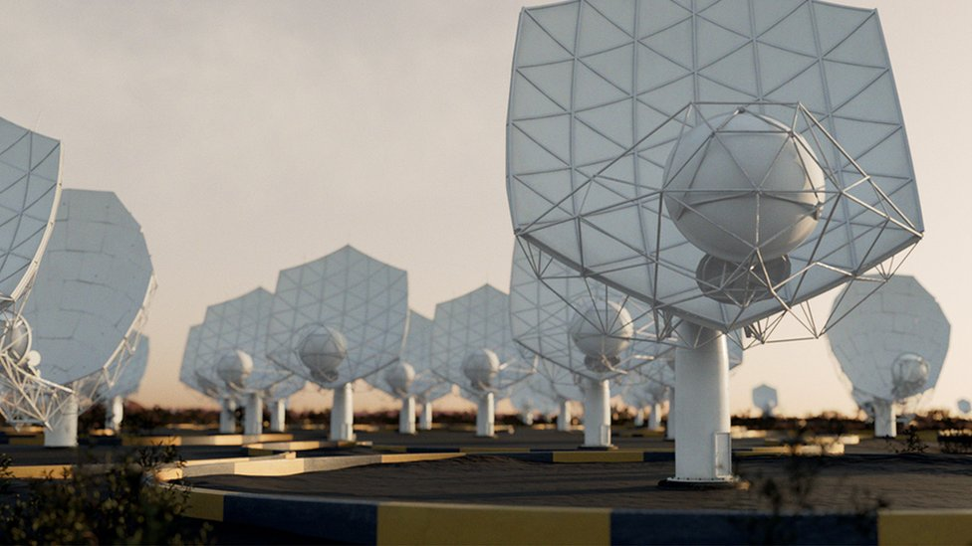
In Africa—and increasingly on the wider global stage—South Africa is emerging as a major actor in science
diplomacy. This position is supported, among other factors, by its important role in major research
infrastructures such as the Square Kilometre Array (SKA) [24] and
by the development of the Science Diplomacy Capital for Africa (SDCfA) in Pretoria (Tshwane).
This ambition is further highlighted by the international conference on science diplomacy scheduled for
November 2026.
[1] commission.europa.eu/strategy-and-policy/priorities-2019-2024/european-green-deal_en
[2] sdgs.un.org/goals
[3] eu-renew.eu/textbook/
[4] research-and-innovation.ec.europa.eu/strategy/strategy-research-and-innovation/europe-world/international-cooperation/global-approach-research-and-innovation_en
[5] research-and-innovation.ec.europa.eu/funding/funding-opportunities/funding-programmes-and-open-calls/horizon-2020_en
[6] cordis.europa.eu/project/id/693799
[7] www.s4d4c.eu
[8] cordis.europa.eu/project/id/770523
[9] catalysd.eu
[10] www.science-diplomacy.eu
[11] eutopia-university.eu/science-diplomacy-2
[12] eutopia-university.eu
[13] asef.org/publications/asia-europe-science-technology-diplomacy-report
[14] asef.org/projects/asia-europe-training-and-youth-summit-on-science-and-technology-diplomacy-2025
[15] eur-lex.europa.eu/legal-content/EN/TXT/HTML/?uri=CELEX%3A32021R0695#d1e3011-1-1
[16] research-and-innovation.ec.europa.eu/funding/funding-opportunities/funding-programmes-and-open-calls/horizon-europe_en
[17] research-and-innovation.ec.europa.eu/strategy/strategy-research-and-innovation/europe-world/international-cooperation/science-diplomacy_en
[18] research-and-innovation.ec.europa.eu/news/all-research-and-innovation-news/european-framework-science-diplomacy-2025-02-13_en?
[19] research-and-innovation.ec.europa.eu/document/download/6d91a26e-a0c5-4a22-b77b-4a0c18ac5f2c_en?filename=ec_rtd_european-framework-science-diplomacy-summary.pdf
[20] eu-science-diplomacy.service-facility.eu/en/outcomes
[21] asef.org/projects/asia-europe-training-and-youth-summit-on-science-and-technology-diplomacy-2025
[22] www.consilium.europa.eu/en/press/press-releases/2026/05/29/council-defines-a-new-framework-for-science-diplomacy
[23] www.s4d4c.eu/new-developments-in-2026-council-recommendations-and-a-new-project-consolidating-european-science-diplomacy
[24] www.skao.int/en



