
 Who are you and what exactly do you do?
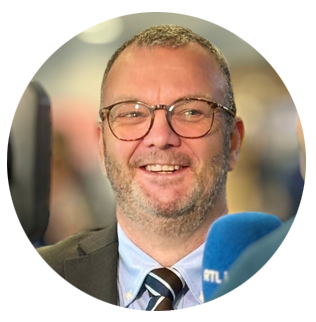
My name is Kris Capelle, and I am the Head of the Astronaut Training Unit (Basic and Mission Training) at the European Astronaut Centre (EAC) in Cologne.
I am responsible for all ISS-related training, for both astronauts and ground crew.
My main tasks include:
And last but not least: I also have the honor of being responsible for the training of our Belgian astronaut, Raphaël Liégeois.
First and foremost, I focus on coordinating with the ESA team regarding our upcoming activities. This includes meetings with management in Cologne, with team leaders, and with trainers. I also oversee operational procedures and training protocols. And, of course, there is the inevitable task of keeping up with emails.
Even after all these years, space travel has lost none of its fascination for me. In every aspect: whether it’s the preparations for launch, the international collaborations from Japan to the United States, the motivated colleagues, or the astronauts… From time to time, I even get to participate in activities like winter survival exercises or parabolic flights, and they’re always wonderful experiences.
Honestly, there’s very little about my job that I find uninteresting.
I’m perhaps a little less keen on administrative work in general, and certainly when it comes to contracts. Sometimes the workload can seem pretty heavy, but paradoxically, that can actually motivate me.
For as long as I can remember, I’ve always been fascinated by space exploration. As an officer in the Belgian Army, I had some wonderful opportunities and always loved my work, whether during my studies, in Germany, or in the former Yugoslavia. But when I had the chance to join ESA, I didn’t hesitate to take the plunge, even though it meant giving up my career as an officer.
| Belgian Army / NATO: | |
| 10/94-07/97: | Platoon commander in a Belgian Telecommunication Battalion in Germany. |
| 12/96-03/97: | Communications Officer for United Nations in Croatia |
| 1997-1998: | Station Commander of the NATO Satellite Communication Station for the NATO Headquarters in Brussels and SHAPE (Belgium). |
European Space Agency (ESA): |
|
| 1998-2007: | European Operations Centre (ESOC), Darmstadt Ground Operations Manager for Launches and critical operations Ground Station Engineer Redu (Belgium) and New Norcia (Australia) |
| 2007-2015: | ATV-CC, Toulouse ATV Lead Mission Director, Toulouse Head of ATV Operations Section |
| 2015-nu: | European Astronaut Centre (EAC), Cologne Head of Astronaut Basic and Mission Training Unit Basic Training Project Manager for ESA Astronaut Class 2023 |
After earning my degree in Iindustrial Engineering at the Royal Military Academy (ERM), I went on to earn a master’s degree in Space Systems Engineering from Delft University of Technology in the Netherlands.
It’s always hard to say, but what I am certain of is that my military training has helped me in areas such as structured thinking, stress management, and leadership. These are skills that have been of great help to me throughout my career.
What I’d like to share:


